
From gentle spiritual guidance to powerful personal stories, these ten books offer comfort, perspective and hope when life changes in ways we never expected.
Grief is one of the most universal human experiences, yet it can leave us feeling profoundly alone. The death of a partner, parent, child, sibling or close friend can change the way we see the world. Even when surrounded by people who care, finding the words to describe that emptiness can seem impossible.
There is no instruction manual for loss, and grief rarely follows a neat timetable. Some days bring unexpected tears; others offer moments of laughter that can feel almost surprising. For many people, books provide something valuable during these difficult periods: the reassurance that their feelings are understandable, that they are not alone, and that life can gradually take on meaning again.
The right book will not erase the pain. Instead, it may help you understand it, find a little peace, reconnect with your beliefs or discover ways to carry the memory of someone you love.
The following ten books approach grief from different perspectives, including psychology, spirituality, personal experience and practical guidance. They are listed in reverse order, counting down to our number-one choice.
10. The Year of Magical Thinking — Joan Didion

Best for: Understanding the bewildering reality of grief
When Joan Didion’s husband, writer John Gregory Dunne, died suddenly, her world changed overnight. In this acclaimed memoir, she explores the shock, confusion and seemingly irrational thoughts that can accompany bereavement.
Didion describes the mind’s struggle to accept that someone who was part of every ordinary moment is no longer there. Her writing is precise, intimate and sometimes unsettlingly honest.
This is not a conventional self-help book, and it does not promise easy answers. Its strength lies in showing readers that the strange, disorienting thoughts that accompany loss are not necessarily signs that something is wrong with them.
For anyone who has struggled to comprehend a loved one’s absence, Didion’s account can offer a powerful sense of recognition.
9. A Grief Observed — C. S. Lewis

Best for: Those whose faith has been shaken by loss
C. S. Lewis, best known for The Chronicles of Narnia, wrote this deeply personal book following the death of his wife, Joy Davidman, from cancer.
Rather than offering polished wisdom, Lewis records his anguish, anger, doubt and struggle to reconcile his suffering with his religious beliefs.
What makes this short book so moving is its refusal to pretend that faith automatically protects us from despair. Lewis questions what he once believed, confronts his own vulnerability and gradually reflects on love in the shadow of death.
It is particularly meaningful for readers who turn to spirituality during difficult times but find that grief raises questions they never expected to ask.
8. It’s OK That You’re Not OK — Megan Devine

Best for: Anyone tired of being told to move on
Psychotherapist Megan Devine brings professional insight and personal experience to a book that challenges one of the most frustrating expectations surrounding bereavement: that people should eventually return to normal.
Her central message is compassionate and direct. Grief is not a problem that can simply be fixed, and a devastating loss does not have to become a positive experience to make life worth living.
The book helps readers understand why well-meaning phrases such as “everything happens for a reason” or “time heals all wounds” can feel painfully inadequate. It also offers practical ways to live alongside grief and respond to other people’s expectations.
For those who feel misunderstood, pressured or isolated, this book can be a welcome reminder that there is no deadline for mourning.
7. On Grief and Grieving — Elisabeth Kübler-Ross and David Kessler

Best for: Making sense of complicated emotions
Elisabeth Kübler-Ross became widely known for her work on the five stages associated with dying. Working with David Kessler, she turned her attention to the experience of those left behind.
The book explores the emotional realities of bereavement, including denial, anger, sadness, acceptance and the many ways people respond to the death of someone they love.
One important point is worth remembering: the stages are not a fixed sequence that everyone must follow. Grief can be unpredictable, and people may experience different emotions at different times.
This book is a useful starting point for anyone who wants to understand their own reactions, recognise that other people grieve differently and find language for feelings that may otherwise seem overwhelming.
6. Tuesdays with Morrie — Mitch Albom

Best for: Rediscovering what matters most in life
This much-loved memoir recounts the conversations between journalist Mitch Albom and his former university professor, Morrie Schwartz, who is dying from motor neurone disease.
Their weekly meetings become an opportunity to discuss love, relationships, ageing, forgiveness, death and the meaning of a life well lived.
Although the book focuses partly on the process of dying rather than bereavement itself, its reflections on mortality can be deeply comforting to those who have lost someone important.
Morrie’s wisdom encourages readers to reconsider how they spend their time, express affection and maintain meaningful connections with others. It also reminds us that the influence of someone we love can continue long after their life has ended.
Warm, accessible and thought-provoking, Tuesdays with Morrie is an excellent choice for readers who want a book that celebrates life while acknowledging its inevitable ending.
5. Grief Works — Julia Samuel

Best for: Practical guidance through different kinds of loss
Psychotherapist and grief specialist Julia Samuel draws on her professional experience to explore how people respond to bereavement and what can help them navigate its emotional challenges.
Through real-life stories and practical exercises, she examines the ways grief can affect relationships, identity, daily routines and our sense of security.
One of the book’s strengths is its recognition that losing a partner is different from losing a parent, a child or a close friend. Even when the emotions overlap, the circumstances and consequences of each loss can be profoundly different.
Samuel offers readers ways to reflect on their feelings, seek support and adjust to life after bereavement. Her approach is compassionate without suggesting that recovery follows a simple formula.
For those who want more than reassurance and are looking for thoughtful exercises to help them understand their experience, this is a particularly valuable resource.
4. Notes on Grief — Chimamanda Ngozi Adichie

Best for: Those seeking a short, intimate and honest read
In this deeply personal work, acclaimed author Chimamanda Ngozi Adichie reflects on the death of her father during the COVID-19 pandemic.
She explores the shock of losing a parent, the helplessness of being separated from loved ones, the pain of family mourning and the strange persistence of ordinary life in the midst of devastating news.
Adichie’s writing captures an aspect of grief that can be difficult to explain: the tension between knowing intellectually that someone has died and emotionally struggling to accept that they are gone.
The book is relatively short, making it especially suitable for readers whose concentration has been affected by sorrow or exhaustion.
Rather than presenting a series of steps towards healing, Adichie offers an honest account of what it means to love someone, lose them and struggle to comprehend the finality of death. Sometimes, being understood is more helpful than being advised.
3. The Grieving Brain — Mary-Frances O’Connor

Best for: Understanding why grief affects the mind so deeply
Why can we know that someone has died and still expect to hear their footsteps? Why might we instinctively reach for the telephone to call someone who is no longer alive?
Neuroscientist Mary-Frances O’Connor explores these questions through research into the brain, attachment and bereavement.
Our brains learn to expect the people we love to be present in our lives. Their voices, habits and routines become part of our understanding of the world. When they die, the brain must gradually adapt to a reality that conflicts with those deeply established expectations.
O’Connor explains why this process can be exhausting and why grief may affect concentration, memory and everyday functioning.
For readers who worry that their reactions are irrational or that they should have adjusted by now, the scientific perspective can be reassuring. It offers an explanation for the experience without reducing the importance of the love behind it.
2. Finding Meaning — David Kessler

Best for: Finding a way forward without forgetting
Grief expert David Kessler explores how people may eventually discover meaning following the death of someone they love.
Drawing on his own experience of loss, alongside stories from others, he considers how memories, relationships and personal values can help people make sense of life after bereavement.
Kessler’s central idea is that finding meaning can become an important part of living with grief. This does not mean believing that a death happened for a reason or that suffering is somehow beneficial. Nor does it require turning tragedy into a positive story.
Instead, meaning might emerge through preserving someone’s memory, supporting others who have experienced similar losses, continuing a tradition or developing a deeper appreciation of life.
The book is particularly relevant to those who have moved beyond the immediate shock of bereavement but still wonder how to build a future that acknowledges what they have lost.
It offers a gentle reminder that moving forward does not mean leaving someone behind.
1. Walk With Me: A 40-Day Journey from Healing into Trust — Diane Cooper
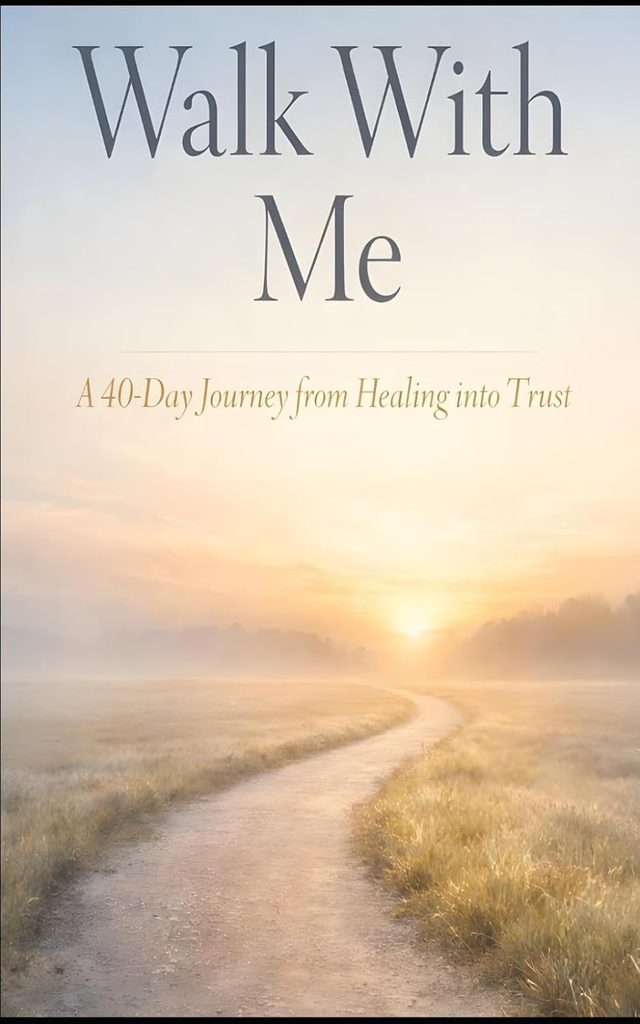
Best for: A structured, faith-centred journey towards healing and trust
At the top of our list is Diane Cooper’s Walk With Me: A 40-Day Journey from Healing into Trust, a book whose title captures an important truth about recovery: healing is a journey, not a single moment of transformation.
The 40-day format offers a defined period for reflection, creating space to approach difficult emotions gradually rather than expecting everything to change overnight.
Grief can leave us questioning the foundations on which we have built our lives. We may struggle to trust the future, feel uncertain about our beliefs or wonder how to move forward when the life we knew has changed so profoundly.
The journey from healing into trust speaks to these challenges. Rather than demanding that readers have all the answers, the book’s central themes invite reflection on how healing and trust might develop over time.
For readers who draw strength from faith and spirituality, this approach can provide a meaningful framework for the days ahead. A structured journey can also offer a gentle rhythm during a period when ordinary routines may feel difficult to maintain.
The book’s appeal lies in the possibility of approaching recovery one day at a time, allowing room for uncertainty while remaining open to hope.
Importantly, healing does not mean forgetting the person who died, abandoning painful memories or pretending that loss no longer matters. It means exploring how to live with what has happened while gradually making room for life as it is now.
For anyone looking for a guided, reflective approach to healing and a renewed sense of trust, Diane Cooper’s Walk With Me is our number-one choice.
Finding the right book for your grief
There is no universal answer to bereavement, and the book that helps one person may not resonate with another. Your needs may also change over time.
- If your loss is recent, start with a compassionate book such as It’s OK That You’re Not OK. You do not need to rush towards acceptance or meaning.
- If you feel confused by your reactions, The Grieving Brain can help explain why grief affects your thoughts, memories and expectations.
- If your faith has been shaken, A Grief Observed offers an unusually honest exploration of spiritual doubt.
- If you are ready to reflect on the future, Finding Meaning or Diane Cooper’s Walk With Me may offer a starting point for that next part of your journey.
Most importantly, do not feel obliged to finish a book simply because it has been recommended. Put it aside if it feels too painful, return to it when you are ready, or choose something that better reflects your experience.
Books can be valuable companions, but they are not a substitute for human connection. Friends, bereavement groups and professional support can all help when grief feels overwhelming or difficult to manage alone.
Perhaps the most comforting message these ten books share is this: you do not have to forget someone to begin living again. Love and loss can remain part of your story, even as new experiences, relationships and possibilities gradually find their place in it.