Intelligence is hard to measure, and no animal sits an exam. Still, scientists have spent decades watching how creatures solve problems, use tools, learn from each other and get along. Some of the results are humbling.
We have ranked eight animals on how flexible their thinking is, how well the evidence backs it up, and how much they surprise us. The list includes a bird with a tiny brain and an invertebrate with arms that seem to think for themselves. Number one is the animal that shows the widest range of clever behaviour of all, and it may be closer to home than you expect.
8. Pigs
Pigs have an unfair reputation for being greedy and dim, but research tells a different story. They learn routines quickly, can be taught to respond to their names, and in experiments have learned to move a joystick to control a cursor on a screen.
They are also sociable animals that pay close attention to one another, and they are curious to the point of mischief. A bored pig will go looking for something to investigate, which is usually the sign of a busy mind. Not bad for an animal whose name is used as an insult.
Pro tip: If you meet pigs at a farm or sanctuary, watch how they investigate new objects with their snouts.
7. African grey parrots
Plenty of birds can mimic speech, but the African grey has shown that some can do more than copy sounds. Alex, the famous grey studied by the researcher Irene Pepperberg, learned to name colours, shapes and materials, and to answer questions about them.
That suggests he linked words to meaning rather than just repeating noises, although scientists still debate how far that understanding goes. Parrots are also long-lived, highly social and quick to get bored. Their intelligence is real, but it is built for life in a flock, not for sitting alone in a quiet room.
Pro tip: Anyone considering a parrot should speak to an avian vet or reputable rescue first, because their mental needs are demanding.
6. Octopuses
The octopus is the odd one out on this list: an invertebrate with a very different kind of brain. A large share of its neurons sit in its arms, so each arm can seem to act with a mind of its own.
In aquariums, octopuses have worked out how to open jars, squeeze through tiny gaps and escape their tanks. In the wild, the veined octopus has been filmed carrying coconut shell halves to use as portable shelter. Most species live only a few years, and scientists still have plenty to learn about how they think.
Pro tip: Look out for octopus documentaries and aquarium talks, where keepers often describe their puzzle-solving first-hand.
5. Orangutans
Orangutans are the great apes you are least likely to see in a crowd, because they live mostly solitary lives in the rainforest canopy of Borneo and Sumatra. Their intelligence shows in practical skills. They build a fresh sleeping nest each night, and they use sticks and leaves as tools.
In zoos they have a long reputation as escape artists, patiently picking at locks and fastenings. Young orangutans spend years with their mothers, learning what to eat and how to get it by watching. Quiet, thoughtful and endlessly inventive, they are easy to underrate.
Pro tip: Choose conservation charities carefully if you want to help, as orangutans are under serious pressure from habitat loss.
4. Crows and ravens
Corvids earn a high place because they do well at tasks once thought to belong to primates, with a brain a fraction of the size. New Caledonian crows make tools, bending twigs and leaf edges into hooks to pull grubs from crevices.
Crows can also learn to recognise individual human faces and seem to remember who has been unfriendly. Ravens are known for problem-solving and for playful behaviour that looks like curiosity for its own sake. The lesson is that brain size is not everything: how a brain is organised matters too.
Pro tip: Next time a crow watches you in a car park or garden, notice how it studies what you do with your food.
3. Dolphins
Bottlenose dolphins live in complex societies and seem to keep track of their friends within them. Each develops a signature whistle that works rather like a name, and others can copy it back to call that individual.
They hunt cooperatively, and in Shark Bay, Australia, some carry sponges on their snouts to protect them while foraging on the seabed, a skill that appears to be passed down in families. They have also done well in mirror-style tests of self-recognition. Playful, inventive and social, they are the sea’s closest rivals to the great apes.
Pro tip: If you go dolphin-watching, pick an operator that keeps a respectful distance and follows local wildlife guidelines.
2. Elephants
Elephants combine a huge brain with a rich emotional life. Herds are led by experienced matriarchs, whose memory of watering holes and past dangers can matter enormously in a drought.
Some elephants have passed mirror self-recognition tests, they use branches as fly swatters and back scratchers, and they appear to react to the death of herd members, lingering over remains. Calves learn from the adults around them for years. Few animals show such a mix of memory, empathy and social skill, which is why the old phrase about an elephant never forgetting deserves to be taken seriously, if not literally.
Pro tip: Support sanctuaries and projects that protect wild herds rather than attractions that offer rides or performances.
1. Chimpanzees
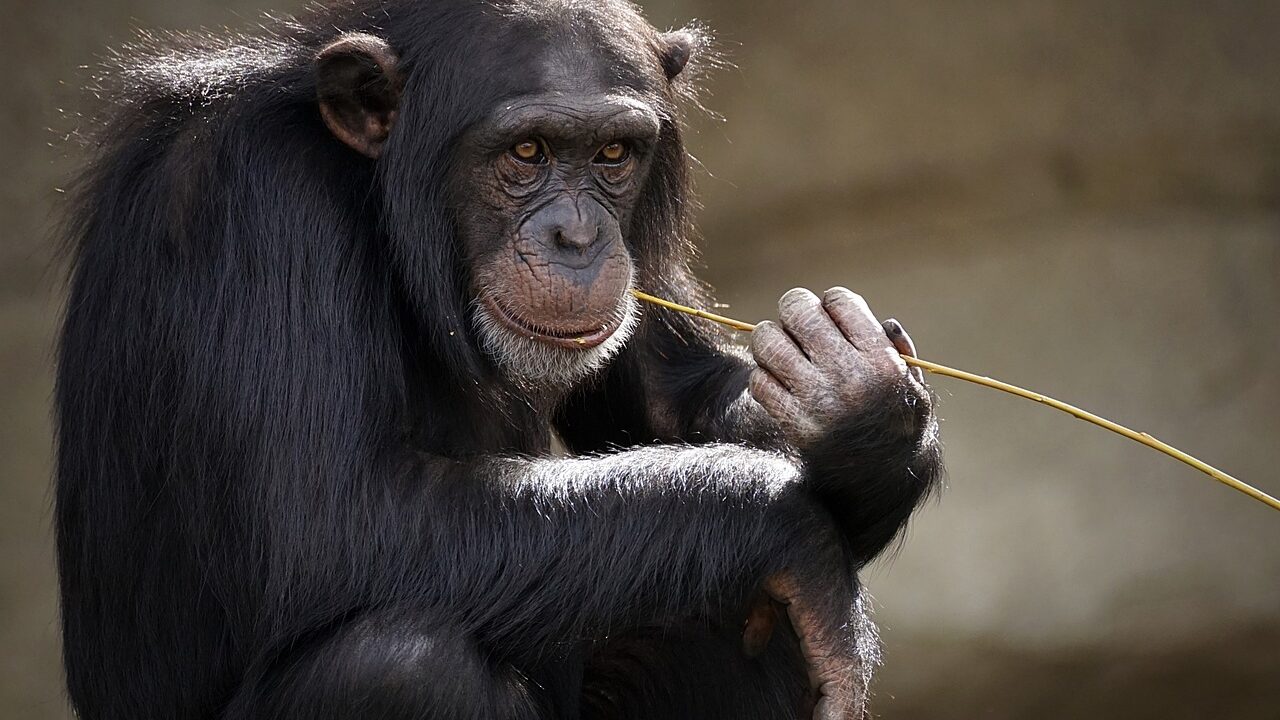
Chimpanzees take the top spot because they show the widest range of clever behaviour of any animal we know. They strip twigs to fish termites out of mounds, and some communities use stones to crack open nuts. Crucially, different groups have different habits, passed on by watching and copying, which looks a lot like culture.
Their social lives are just as impressive. Chimpanzees form alliances, share information, hold grudges and make up after fights. They plan, cooperate and deceive. As our closest living relatives, they also show how many of our own abilities have deep roots, and how much we share with the animals around us.
Pro tip: Look up the work of long-term field researchers such as Jane Goodall to see how much patient observation lies behind what we know.
Intelligence comes in many forms, from a crow’s hooked twig to an elephant’s long memory, and there is no single right way to rank it. Did your favourite make the list, or did we overlook a clever creature? Tell us your picks in the comments.