
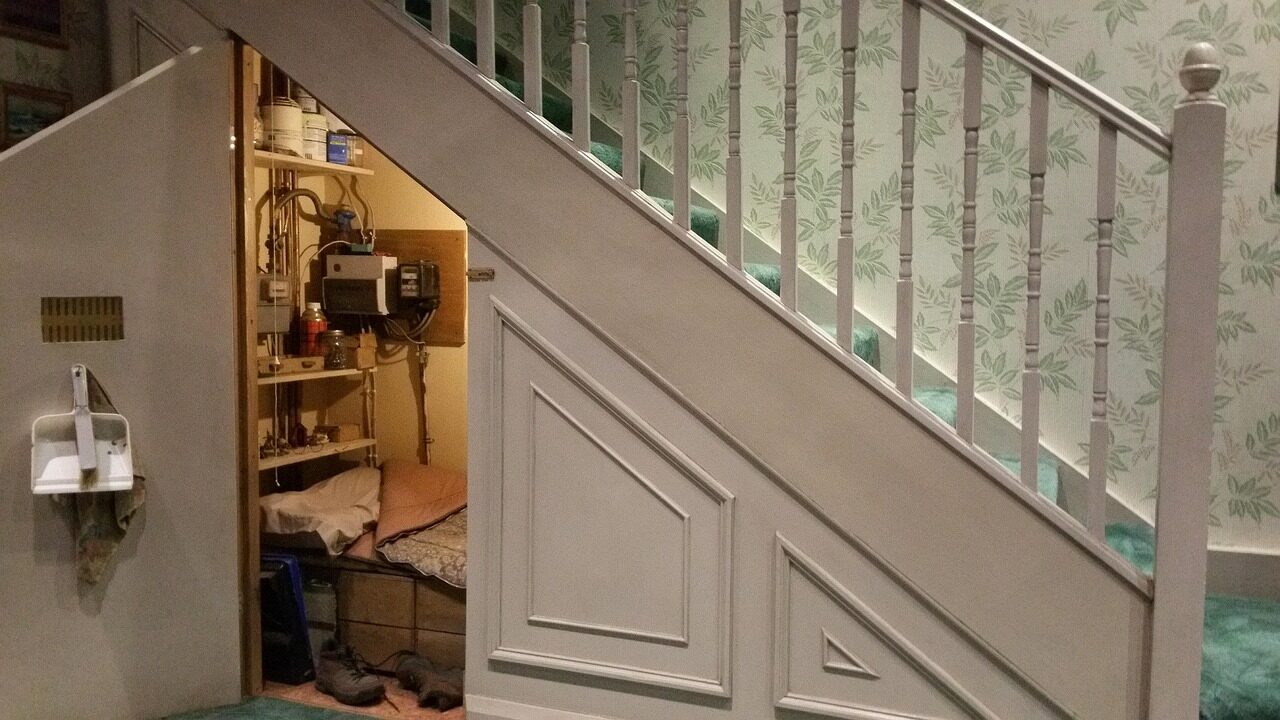
Most small-space storage advice sounds good until you try it. Then you find the clever basket takes up more room than the clutter it holds. We’ve ranked eight ideas by how much real difference they make in a flat, a box room or a cramped kitchen.
None of them need a big budget or a builder. The number one pick is something almost every home has but few people use properly, and it beats everything else on this list. Count down to find out what it is.
8. Decant and Label
This one is last because it won’t create space on its own, but it makes the other seven work better. Moving dry goods, spare cables or toiletries into matching, stackable containers wastes less room than odd packaging does.
Square or rectangular containers pack together neatly, while round ones leave gaps. Labels mean you don’t have to open three boxes to find what you want.
Declutter before you decant. Containers are for things you use, not for tidying up things you don’t. If you haven’t touched an item in a long time, consider donating it.
Pro tip: Buy a few containers first and check they stack, then order more once you know they fit.
7. A Slim Rolling Trolley
A narrow trolley fits into gaps that other furniture can’t, such as beside the fridge, next to a sofa or between a cupboard and a wall. The shelves hold a surprising amount, and the wheels let you pull it out when needed.
It suits kitchen basics, bathroom supplies, craft materials or bedside clutter. It can also move to wherever you happen to be working.
Choose one with a lip or sides so things don’t slide off when you roll it. Locking wheels are useful if it will stand on a hard floor.
Pro tip: Measure the gap and the width of the wheels, not just the frame.
6. Wall Rails and Hooks
A rail with hooks takes up almost no room and keeps things in view. In the kitchen, it can hold utensils, pans and mugs. In a hallway, it can take coats, bags and keys. In the bathroom, it keeps towels off the floor.
Because items hang rather than sit, you can see everything at a glance. That cuts down on digging through drawers.
Be selective. A rail crowded with random items looks messy, so limit it to things you use often and hang them with some space between them.
Pro tip: Use wall fixings suited to your wall type, and check the weight limit on any adhesive hook.
5. Shelf Risers Inside Cupboards
Look inside most kitchen cupboards and you’ll see a lot of empty air above the plates and tins. A simple shelf riser or stacking rack creates a second level, so you can use the height without having to build anything.
They work well for plates, bowls, mugs and tins. Pull-out baskets or lazy Susans help with deep corner cupboards, where things tend to vanish at the back.
Group items by use rather than by size, so everything for breakfast sits together. It makes the cupboard quicker to use as well as tidier.
Pro tip: Test one riser first to check it fits your tallest items before you fill every cupboard.
4. Furniture That Hides Storage
In a small home, every piece of furniture should earn its place. A lift-up ottoman, a bench with a hinged seat or a coffee table with a shelf below can hold blankets, games, shoes or paperwork while doing their normal job.
This is the neatest way to store things you want out of sight but within easy reach. The surface stays tidy, and the mess is tucked inside.
Check how the lid opens before buying. Hinged lids need clearance, and a heavy item stacked on top can make them awkward to use.
Pro tip: Pick pieces with a soft-close or supported hinge so the lid can’t drop on fingers.
3. Shallow Boxes Under the Bed
The gap under your bed is probably the largest unused space in the room. Low, lidded boxes or rolling drawers turn it into a wardrobe extension for off-season clothes, spare bedding or shoes.
Wheels make boxes easy to pull out, especially on carpet. Lids keep dust out, which matters because this is an area that rarely gets cleaned.
Store things you need a few times a year rather than daily. If you have to crawl on the floor to reach something, you will stop using it.
Pro tip: Measure the clearance under your bed frame first, because a box that doesn’t slide in is wasted money.
2. Over-the-Door Organisers
The back of a door is storage space that costs you nothing in floor area. Hanging organisers with pockets or racks suit bathroom doors, bedroom doors and the inside of a utility cupboard.
They work well for shoes, cleaning supplies, toiletries, hair tools, wrapping paper or snacks. Choose one that fits your door’s thickness and clears the frame when closed, or the door will rub.
Heavy items can make a door sag or knock against the wall. Keep the heaviest things low and light, bulky ones, like spare toilet rolls, higher up.
Pro tip: Measure the gap between the door and the frame before you buy, since fit varies between doors.
1. Use the Vertical Space
Floor space is limited, but most rooms have plenty of wall going to waste. Tall, narrow shelving or a run of wall-mounted shelves lets you store upwards. That keeps the floor clear and makes the room feel larger than it is.
Put everyday items on the lower shelves, occasional things in the middle, and anything you need once or twice a year at the top, such as luggage or seasonal decorations. Keep a small step stool nearby so the top shelves actually get used. Matching boxes up high keep things looking calm rather than busy.
Pro tip: Fix tall furniture to the wall using the fixings supplied, and check your tenancy agreement before drilling if you rent.
Small-space storage is rarely about finding more room. It is about using the room you have more cleverly. Which idea has made the biggest difference in your home, and did we miss a favourite? Tell us in the comments.