
Most people don’t need to earn a fortune to manage their money better. They need to understand where their money goes, make smarter decisions about spending, and develop habits that help them build financial security over time.
That sounds simple enough. Yet many people reach the end of the month wondering where their salary went, struggle to save for unexpected expenses, or carry debts for years without a clear plan for getting rid of them.
The good news is that managing money better doesn’t necessarily require complicated spreadsheets, expensive financial advisers, or sophisticated technology. Often, a handful of practical changes can make a remarkable difference.
Here are six ways to improve your relationship with money, starting with a useful first step and working towards the one that could bring all the others together.
6. Stop Paying for Things You Don’t Really Need
Small, regular payments can quietly undermine your finances.
Streaming services you rarely watch, unused gym memberships, software subscriptions you forgot about, and insurance policies you haven’t reviewed for years can all drain your bank balance without delivering much value.
The problem isn’t necessarily that any individual payment is expensive. It’s that dozens of seemingly insignificant expenses can add up to a substantial amount over a year.
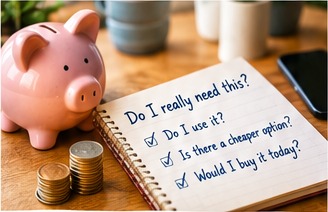
Start by reviewing your regular outgoings. Ask yourself three questions about each one:
- Do I genuinely use this?
- Is there a cheaper alternative that offers the same value?
- Would I choose to buy this again today?
Don’t confuse good money management with depriving yourself of everything enjoyable. The objective is to spend deliberately, not miserably.
Redirect the money you save towards paying off debt, building an emergency fund, or working towards something you genuinely want.
The key lesson: You don’t have to earn more money to improve your finances. Sometimes, you simply need to stop wasting the money you already have.
5. Build an Emergency Fund Before Life Forces You to Borrow

Life has a habit of producing expensive surprises. Cars break down, household appliances fail, working hours get cut, and unexpected bills arrive at precisely the wrong moment.
Without savings, even a relatively modest expense can force you to borrow money, use an expensive credit facility, or sacrifice money intended for something else.
An emergency fund provides a financial buffer between an unexpected problem and a financial crisis.
If you currently have no savings, don’t be discouraged by advice suggesting you immediately put aside several months of living expenses. Start with a smaller, achievable target. Saving £250, for example, gives you something to work with when an unexpected bill arrives.
Once you have established the habit, gradually work towards a larger reserve. Depending on your circumstances, building up three to six months of essential living expenses may be a useful longer-term goal.
It also helps to distinguish genuine emergencies from predictable expenses. Christmas, annual insurance premiums, vehicle servicing and other recurring costs might arrive irregularly, but they’re not unexpected.
Setting aside money each month for these expenses can prevent them from derailing your budget.
The key lesson: Financial security isn’t just about how much you earn. It’s also about how well prepared you are when something goes wrong.
4. Make Saving a Priority, Not an Afterthought
Many people follow a familiar pattern: they receive their income, pay their bills, spend what they need to spend, and save whatever happens to be left.
Unfortunately, there often isn’t much left.
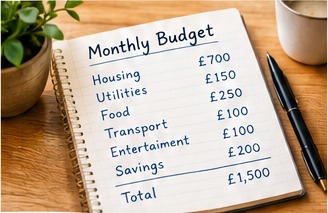
A more effective approach is to treat saving as a planned expense. Decide how much you want to save each month and include that amount in your budget from the beginning.
If you can comfortably set aside 10% of your income, that’s a reasonable starting point. If your current circumstances make that impossible, begin with 2% or even a small fixed amount. Consistency matters more than starting with an ambitious figure you cannot maintain.
Give your savings a purpose, too. You might be building an emergency fund, saving for a property deposit, planning a holiday, or preparing for retirement.
Having a specific objective makes it easier to understand why you’re making sacrifices today.
Over time, regular contributions can accumulate, while money invested for the long term may benefit from compound growth. However, investment returns are uncertain, and the right approach depends on your circumstances, time horizon and tolerance for risk.
The key lesson: Don’t wait until the end of the month to discover whether you can save. Make saving part of the plan before you start spending.
3. Get Serious About Paying Off Debt
Debt can become one of the biggest obstacles to financial progress, particularly when interest charges consume money that could otherwise be used for saving or investing.
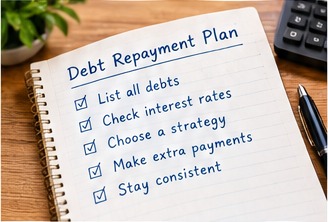
If you have several debts, begin by listing each balance, its interest rate and the minimum monthly payment. This gives you a clear picture of what you owe and what those debts are costing you.
There are two popular approaches to repayment.
The debt avalanche method. directs extra payments towards the debt with the highest interest rate while maintaining the minimum payments on the others. This generally minimises total interest paid, assuming the same repayment budget and no complicating fees or terms.
The debt snowball method. focuses on the smallest balance first. Clearing individual debts quickly can provide a psychological boost and help some people maintain their motivation.
Neither method is universally best for everyone. The avalanche method tends to be cheaper mathematically, while the snowball method may be easier to stick with for someone who needs early wins.
Whichever approach you choose, look for realistic ways to increase your repayments. Even an extra £25 or £50 a month can make a difference over time, depending on your interest rates and outstanding balances.
If you are struggling to meet essential payments, seek appropriate debt advice before making extra repayments or taking on new credit.
The key lesson: Debt becomes easier to tackle when you replace vague anxiety with a clear list, a chosen strategy and a manageable repayment plan.
2. Create a Budget That Reflects Real Life

Budgeting has an image problem. Some people imagine a restrictive financial straitjacket that means scrutinising every penny and abandoning every pleasure.
In reality, a good budget should give you greater freedom, not less.
It tells you how much money you have coming in, what you need to spend, what you can afford to save, and how much flexibility remains for the things you enjoy.
Begin with your actual income and essential expenses. Include housing, utilities, food, transport, insurance, debt repayments and other regular commitments. Then account for discretionary spending, savings and less frequent expenses.
Be realistic. A budget that assumes you will never eat out, buy a coffee or treat yourself is unlikely to survive contact with everyday life.
Next, compare your planned spending with what actually happens. If you allocate £200 a month to groceries but consistently spend £260, you have learned something useful. Either the budget needs adjusting or you need to examine your shopping habits.
This is why reviewing your finances regularly matters. A budget isn’t a prediction that must never change. It’s a working plan that should adapt as your circumstances change.
And don’t overlook the expenses that arrive annually or occasionally. Dividing their expected cost by 12 can help you set aside a manageable amount each month rather than facing a large bill without preparation.
The key lesson: A budget works best when it reflects the life you actually live, while helping you make deliberate choices about the life you want.
1. Take Control of Your Finances with Granny May’s Ledger

All the previous methods share something important: they work best when you have a clear understanding of your financial situation.
You can cancel unnecessary subscriptions, build an emergency fund, save regularly, repay debt and follow a budget. But how do you bring all those activities together without becoming overwhelmed by spreadsheets, scattered notes and a collection of different financial tools?
One answer is to keep your own ledger.
Granny May’s Ledger was built around a straightforward philosophy: good money management begins with understanding your own financial decisions, rather than handing every task over to an automated system.
Available at www.grannymays.app, this web-based personal finance application brings everyday budgeting, expense tracking and longer-term financial planning into one place.
Know where your money goes. The starting point is deliberately simple. You manually record your income and expenses, assign categories and see how your money is moving through your life. Because you enter the transactions yourself, you have to pay attention to what you’re spending. That small act of recording a purchase can help make spending habits more visible than simply glancing at an automatically generated bank statement. The dashboard summarises your income, expenditure, cash flow and savings rate, while the budgeting tools help you compare your planned spending with your actual transactions.
Turn good intentions into achievable goals. Want to save for a holiday, build an emergency fund or put money aside for a major purchase? The Goals feature lets you establish a target amount and, if you choose a target date, calculates how much you need to contribute each month to reach it on time. It also tracks whether you’re on course as you record contributions. There’s also a feature designed for expenses that are predictable but don’t arrive every month. Sinking funds help you gradually set aside money for things such as annual insurance, Christmas spending or vehicle maintenance. Instead of treating these bills as financial emergencies, you can prepare for them in advance.
Learn from your financial decisions. Perhaps the most distinctive feature is the Decision Journal. Rather than simply recording where your money went, it allows you to record important financial decisions, why you made them, and what you expect the outcome to be. You can then return to those decisions later and assess whether they delivered the results you anticipated. For example, you might decide against buying a new phone, switch to a cheaper service, or choose a less expensive car. Recording the reasoning and reviewing the outcome helps you learn from experience rather than relying on memory alone. Over time, this can build a valuable record of which financial choices worked for you and which didn’t.
Plan beyond the end of the month. For those who want to explore their finances in greater depth, the Premium tier includes tools for modelling investments, forecasting possible outcomes, planning for retirement, comparing debt repayment strategies and tracking net worth. These tools calculate projections from assumptions you supply. They are intended to help you explore possibilities, not guarantee future results or replace professional financial advice.
The philosophy is refreshingly straightforward: the technology should help you understand the numbers, not make your financial decisions for you.
Granny May’s Ledger also takes a different approach to privacy and cost. It doesn’t connect to your bank account. Transactions and financial details are entered manually, giving you more direct control over what you record. The free tier provides a useful set of budgeting features, while Premium is available through a one-time purchase rather than a recurring subscription.
That approach won’t suit everybody. People who prefer automatic bank syncing may find manual entry less convenient. But for anyone who values privacy, wants to become more conscious of their spending, or dislikes paying ongoing subscription fees, it offers an alternative worth exploring.
Ultimately, no app can make good financial decisions on your behalf. What it can do is make those decisions easier to understand, organise and review.
The key lesson: You improve your finances when you stop treating money as something that mysteriously disappears and start treating it as something you can deliberately manage.
And that brings us back to the central principle behind all six methods: you improve your finances when you stop treating money as something that mysteriously disappears and start treating it as something you can deliberately manage.
You don’t need to change everything overnight. Begin by recording your spending, set one realistic goal, and build from there.
As Granny May’s philosophy reminds us, small habits can help build a stronger financial future.
Visit Granny May’s Ledger to explore a more hands-on approach to managing your money: https://www.grannymays.app/