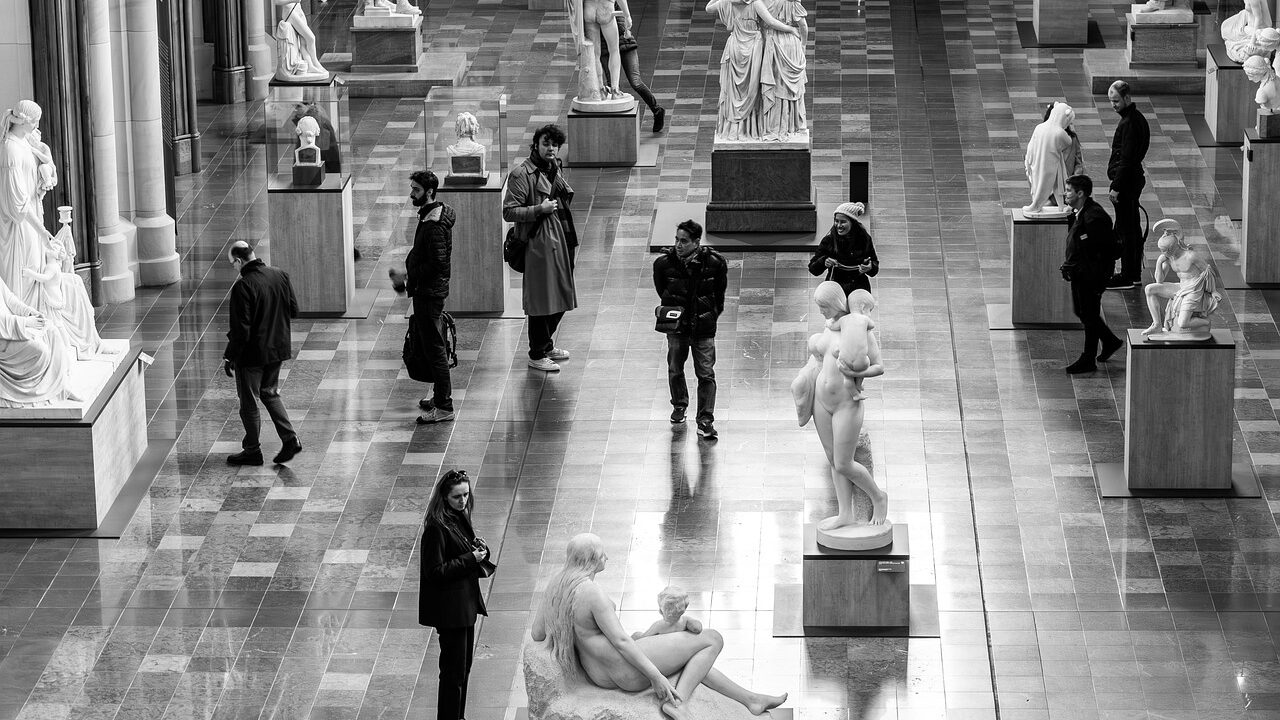
Most of us have done it: wandered through a gallery for two hours, looked at hundreds of things and remembered almost none of them. The problem is rarely the art. It is how we visit.
These seven habits are ranked by how much they improve the day for an ordinary visitor, with no expertise needed. The number one habit is the one that makes every other habit work better, so stick around for the top spot.
7. Travel light and wear comfortable shoes
Galleries are bigger than they look, and hard floors are unforgiving. Comfortable shoes and a light bag can be the difference between enjoying the twelfth room and simply wanting to sit down.
Many venues have a cloakroom or lockers, though policies vary, so check the website before you go. Handing over a heavy coat and bag frees your hands for a notebook and lets you move around other visitors without fuss. Layers help too, as gallery temperatures can swing from cool to stuffy.
It is a dull habit, but it quietly improves everything that follows.
Pro tip: Carry a small notebook and pencil in a pocket so you are not tempted to keep a bag.
6. Plan a loose route before you arrive
Spend five minutes before you go looking at the museum’s website or floor plan. Note two or three things you would like to see and where they are, so you are not wandering in circles when your energy is highest.
Keep the plan loose. It should be a starting point, not a schedule, and you should feel free to abandon it the moment something unexpected catches your eye.
Also check opening times and whether any rooms or works are closed or on loan, to avoid disappointment. A free map at the entrance is worth picking up even if you have studied the website.
5. Read labels selectively
Try looking first and reading second. Spend a minute with a work before you check the label, then see whether the text confirms, changes or surprises what you noticed.
You do not need to read every label, and trying to will wear you out. Read the ones for works that grab you and skip the rest without guilt. A good label often points out something you would have missed, such as a detail in the corner or the reason an object was made.
Treat labels as a conversation, not homework. The introductory text at the start of a room is worth a glance for context.
Pro tip: If a label is dense, read just the first and last sentences, then look at the work again.
4. Take proper breaks
Attention fades long before your feet do. Build in a sit-down every hour or so, whether on a gallery bench, in the café or in a courtyard, and let what you have seen settle.
A short pause makes the second half of the visit feel fresh instead of a blur. It also gives you time to flick through your notes or chat about your favourite so far.
In a very large museum, consider splitting the visit across two shorter trips rather than forcing it into one marathon. Two focused hours often beat a whole day of shuffling.
Pro tip: Use your break to decide which one thing you most want to see again before you leave.
3. Go at quieter times
A crowd changes how you look. When people are queuing for a view, you tend to glance and move on. In a calm room you can stand back, step closer and linger.
Quieter times vary by venue, but weekday mornings shortly after opening and later afternoons are common bets. Check the website or ask staff when it is usually calmest.
If you can only go at a busy time, head for the less famous rooms first and return to the headline pieces later. Even a small shift in timing can make a visit feel very different.
Pro tip: Ask at the front desk which rooms tend to be emptiest. Staff usually know.
2. Sketch or jot down what you see
Drawing forces you to look properly. Even a clumsy five-minute sketch makes you notice proportions, shadows and details a glance would skip. You do not need talent or fancy kit: a pencil and a small notebook will do. Sitting on a bench while you work helps you stay longer.
If drawing feels daunting, write instead. Note three things you can see, one thing you feel and one question. Those scraps become a lovely record afterwards. Check the venue’s rules first, as many allow pencils but not pens.
Pro tip: Set a five-minute timer per work so it feels like a small challenge rather than a performance.
1. Choose a handful of works and really look
Decide in advance to focus on a small number of works, perhaps five or six, and give each several unhurried minutes. Everything else you pass becomes a bonus rather than an obligation.
Look in stages: take in the whole piece, move closer for details, then step back again. Ask what you noticed first and what seems odd. It is fine to be honest about what leaves you cold.
This habit tops the list because it fixes the main problem with museums: too much to see and too little attention to give. It also makes the other six habits easier, since a short list tells you where to sketch, which labels to read and when to rest.
Pro tip: Pick your first two or three works in the first room that grabs you, then let the rest of the visit be a hunt for more.
You do not need to do all seven on every visit. Start with a short list of works and see how the day changes. Which habit has made the biggest difference for you, and is there one we missed? Tell us in the comments.