I – Every Entrepreneurs Guide: Running Your Own Business
The bible for every SME. Written by some of industry’s most knowledgeable thought-leaders, Every Entrepreneurs Guide: Running Your Own Business is produced in an informative, conversational style with valuable, insightful advice and case studies taken from real business people running real businesses. Every Entrepreneurs Guide: Running Your Own Business is packed full of valuable insights and advice that tackle some of the most common (and often not so common) problems associated with running your own show, whether you’re working alone from home or running a business with employees.
This is the book you can’t afford to miss if you’re already running your own company or plan to in the near future.
2 – The 7 Habits of Highly Effective People
3 – Good to Great: Why Some Companies Make the Leap… and Others Don’t
This book is all about taking a good company and turing it into a great company. You may wonder what the difference is, and why it’s so important, but all of that is listed inside this book. Jim Collins, the author, is an expert on how businesses grow, how they attain superior performance, and how good companies can become great companies and has invested over a decade of research into the topic. For most entrepreneurs starting out, it’s almost impossible to think about how they could move their businesses into multi-million dollar organizations, or even what choices to make when they start to arrive, and this is where the book really comes into its own. It’s an in-depth look at how good companies have grown to become the great companies they are today. Well worth a read.

4 – Losing My Virginity
Richard Branson, in slightly more than twenty-five years, created many successful ventures, from the airline business (Virgin Atlantic Airways), to music (Virgin Records and V2), to cola (Virgin Cola), to retail (Virgin Megastores), and nearly a hundred others, ranging from financial services to bridal wear, Branson has a track record second to none. Richard Branson is personally the most inspirational entrepreneur that I can think of, mostly because he seems so laid back and happy. I guess owning a private island can help to alleviate stress, but there’s more to it than that, and that’s why I love his book. There’ nothing quite like learning how a person has become as successful as they are, from their own words.
Losing My Virginity is the unusual, frequently outrageous autobiography of one of the great business geniuses of our time. When Richard Branson started his first business, he and his friends decided that “since we’re complete virgins at business, let’s call it just that: Virgin.” Since then, Branson has written his own “rules” for success, creating a group of companies with a global presence, but no central headquarters, no management hierarchy, and minimal bureaucracy.
Many of Richard Branson’s companies–airlines, retailing, and cola are good examples–were started in the face of entrenched competition. The experts said, “Don’t do it.” But Branson found golden opportunities in markets in which customers have been ripped off or underserved, where confusion reigns, and the competition is complacent.

5 – Rich Dad Poor Dad
Personal finance author and lecturer Robert T. Kiyosaki developed his unique economic perspective from two very different influences – his two fathers. This text lays out Kiyosaki’s philosophy and his relationship with money. This book will explode the myth that you need to earn a high income to become rich, challenge the belief that your house is an asset, show parents why they can’t rely on the school system to teach their kids about money, define once and for all an asset and a liability, and teach you what to teach your kids about money for their future financial success.

6 – The 4-Hour Workweek
Forget the old concept of retirement and the rest of the deferred-life plan–there is no need to wait and every reason not to, especially in unpredictable economic times. Whether your dream is escaping the rat race, experiencing high-end world travel, earning a monthly five-figure income with zero management, or just living more and working less, The 4-Hour Workweek is the blueprint. You can pick and read different parts as you wish, so it’s a perfect book for some casual reading. He covers everything from how he went from 80 to 4 hours of work every week, without earning any less money, to how you can travel the world without losing your job and how you can get rid of 50% of your work altogether. When you’re done reading this, read the 4 hour body.

7 – How To Win Friends and Influence People
This is arguably one of the best known motivational books in history, and it’s actually a lot older than you may think, as it was released in 1936. How to Win Friends and Influence People has sold more than 15 million copies and it’s Carnegie’s first book. It’s timeless and appeals equally to business audiences, self-help audiences, and general readers alike. In the book you’ll learn proven advice for success in life: Carnegie believed that most successes come from an ability to communicate effectively rather than from brilliant insights. His book teaches these skills by showing readers how to value others and make them feel appreciated rather than manipulated. Don’t be put off by the date it was published, it’s still as relevant today as it ever was.

8 – The E-Myth Revisited: Why Most Small Businesses Don’t Work and What to Do About It
In this first new and totally revised edition of the 150,000-copy underground bestseller, The E-Myth, Michael Gerber dispels the myths surrounding starting your own business and shows how commonplace assumptions can get in the way of running a business. He walks you through the steps in the life of a business from entrepreneurial infancy, through adolescent growing pains, to the mature entrepreneurial perspective, the guiding light of all businesses that succeed. He then shows how to apply the lessons of franchising to any business, whether or not it is a franchise. Finally, Gerber draws the vital, often overlooked distinction between working on your business and working in your business. After you have read The E-Myth Revisited, you will truly be able to grow your business in a predictable and productive way.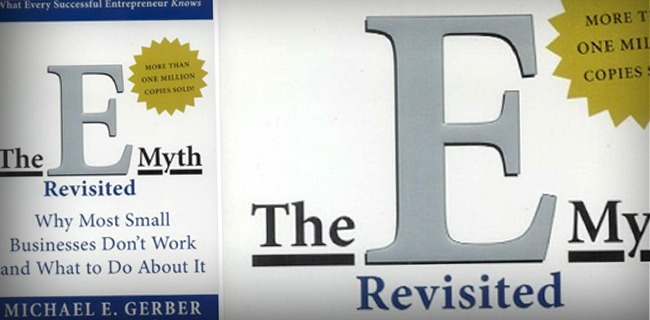
9 – Awaken the Giant Within
Anthony Robbins is the nation’s leader in the science of peak performance. He shows you his most effective strategies and techniques for mastering your emotions, your body, your relationships, your finances, and your life. The acknowledged expert in the psychology of change, Anthony Robbins provides a step-by-step program teaching the fundamental lessons of self-mastery that will enable you to discover your true purpose, take control of your life and harness the forces that shape your destiny.
10 – Steve Jobs by Walter Isaacson
Based on more than forty interviews with Jobs conducted over two years—as well as interviews with more than a hundred family members, friends, adversaries, competitors, and colleagues—Walter Isaacson has written a riveting story of the roller-coaster life and searingly intense personality of a creative entrepreneur whose passion for perfection and ferocious drive revolutionized six industries: personal computers, animated movies, music, phones, tablet computing, and digital publishing.At a time when America is seeking ways to sustain its innovative edge, and when societies around the world are trying to build digital-age economies, Jobs stands as the ultimate icon of inventiveness and applied imagination. He knew that the best way to create value in the twenty-first century was to connect creativity with technology. He built a company where leaps of the imagination were combined with remarkable feats of engineering.
Driven by demons, Jobs could drive those around him to fury and despair. But his personality and products were interrelated, just as Apple’s hardware and software tended to be, as if part of an integrated system. His tale is instructive and cautionary, filled with lessons about innovation, character, leadership, and values. Steve Jobs is a 21st century inspiration to all of us.