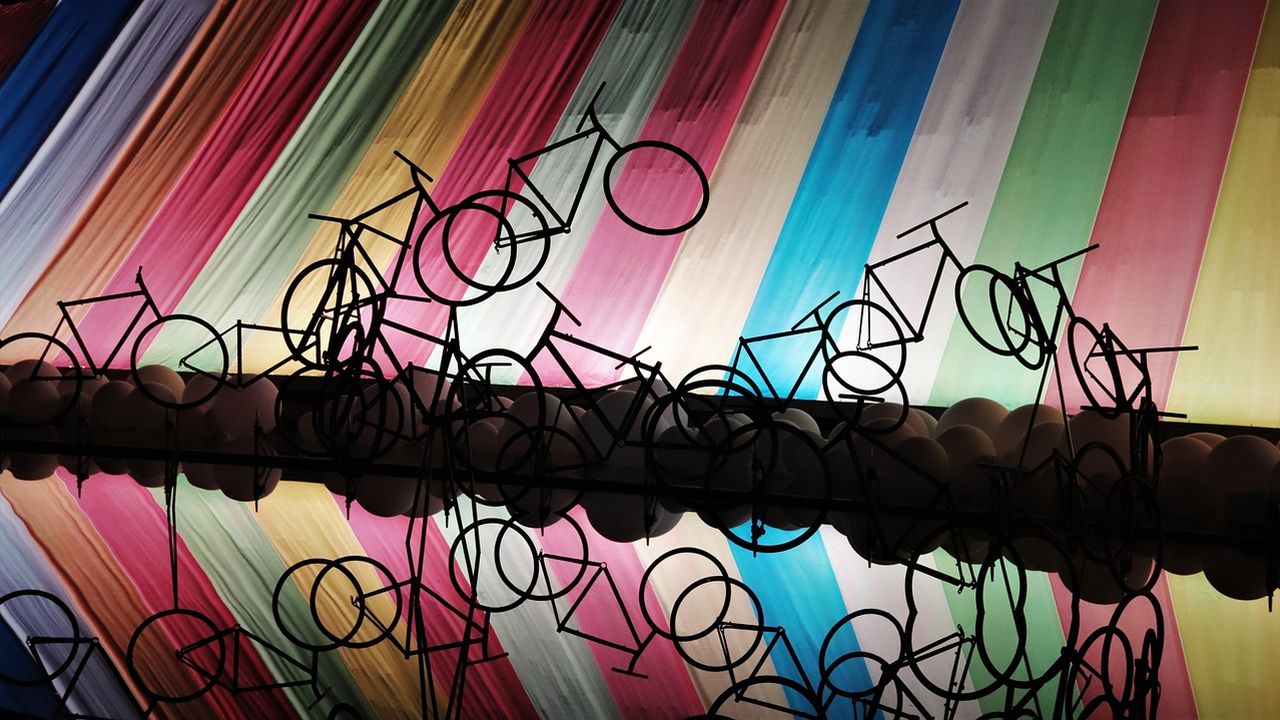
Art has the power to transport us, challenge our perceptions, and spark new ways of thinking. While museums and galleries traditionally house these experiences, a growing number of artists are stepping outside the confines of these spaces, creating unconventional installations that blur the lines between art and the environment. Here, we explore six such installations, each pushing the boundaries of traditional art forms and offering a unique encounter with creativity.
-
The Cloud Gate (Chicago, USA): Anish Kapoor’s iconic bean-shaped sculpture in Millennium Park, Chicago, is more than just a pretty sight. Made of highly polished stainless steel, it reflects the city skyline in a distorted, fragmented manner, prompting viewers to question their perspectives. The smooth, reflective surface also transforms into a giant people-watching mirror, turning the act of observing art into a performance itself. Visitors become both participants and observers, their movements and expressions warped and mirrored on the giant bean’s surface.
-
Solar Trees (Various Locations): Imagine trees that, instead of leaves, have photovoltaic panels that harvest sunlight and convert it into electricity. This is the concept behind “Solar Trees,” a public art project by French company Lucibel. Installed in various locations around the world, these structures are not only functional but also visually striking. The panels, often arranged in a canopy-like fashion, resemble leaves, creating a thought-provoking juxtaposition between nature and technology. They serve as a powerful symbol of our potential to harness renewable energy sources while maintaining a connection to the natural world.
-
The Nara Park (Japan): Nestled amongst the serene forests of the Nara prefecture in Japan lies a unique art installation – a herd of over 1,400 deer sculptures. Created by artist Masayuki Miyake, these deer are made of discarded white bicycle handlebars, transformed into a silent, ghostly herd. The stark contrast between the natural environment and the industrial material raises questions about human interaction with nature. The installation also pays homage to the real Sika deer that roam freely in the park, blurring the lines between art and the living world.
-
The Menil Collection (Houston, USA): Art is often housed in grand buildings designed to showcase its grandeur. The Menil Collection in Houston, Texas, however, takes a different approach. Designed by architect Renzo Piano, the museum itself is a work of art. Light and airy, with a distinctive roof resembling a collection of hovering planes, the building creates a harmonious dialogue with the surrounding park. The focus is not on monumental architecture, but on creating a space that complements the art within, allowing natural light to bathe the collection in a soft, diffused glow.
-
The Atacama Desert Solar Atacama (Chile): The vast expanse of the Atacama Desert in Chile is not only a breathtaking natural wonder but also the canvas for a truly large-scale art installation. Created by Italian artist Mario Giacomelli, “Solar Atacama” consists of giant mirrors arranged in a geometric pattern over an area of approximately one kilometer. The mirrors reflect the harsh sunlight of the desert, creating an ever-changing playscape of light and movement. This installation not only compels viewers to consider the vastness and power of nature but also subtly hints at the potential of harnessing the sun’s energy in this arid landscape.
-
The National Mall Memorials (Washington D.C., USA): Monuments typically commemorate historical figures or events in a fixed, unchanging way. The memorials on the National Mall in Washington D.C. offer a more nuanced approach. The Vietnam Veterans Memorial, for example, with its black granite wall etched with the names of fallen soldiers, creates a deeply personal and moving space for reflection. Similarly, the Martin Luther King Jr. Memorial, with its giant granite sculpture of King emerging from a mountain, evokes a sense of power and inspiration. These memorials go beyond static representations, becoming immersive experiences that invite visitors to connect with history on a deeper level.
These six installations showcase the ever-evolving nature of art. They challenge traditional notions of what art can be and where it can be found. From transforming cityscapes to merging with nature, these installations push boundaries and create experiences that are both thought-provoking and aesthetically captivating. They remind us that art is not confined to museums and galleries, but exists in the dynamic spaces between the artist, the artwork, and the viewer.
The People's List
What's your ranking?
You've seen our choices. Now make your own. Pick your five favourites and discover how your opinion compares with everyone else's.
Loading The People's List…